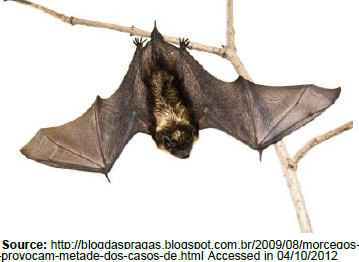
[1] Culling vampire bats in South American nations does not curb the spread of rabies, in fact it
could actually be counterproductive, a study suggests. Until now, it had been assumed that controlling
bat numbers would, in turn, control the spread of the rabies virus. Researchers say rabies is found in
most bat populations, but vampire bats - which feed on mammals' blood - are responsible for most
[5] infections."We found that rabies is there no matter what," said co-author Daniel Streicker, an ecologist
at the University of Georgia, US."The size of the bat colony didn't predict the proportion of bats that
were exposed to the virus."That's important because if there is no relationship between bat population
density and rabies, then reducing the bat population won't reduce rabies transmission within bats."
For about three decades, the main focus in Peru to halt the spread of the virus - which is
[10] transmitted from animals to humans or livestock, and results in death if left untreated - has been to
cull common vampire bats (Desmodus rotundus) using poisons, or even explosives. The researchers,
writing in their paper, explained that the data they collected over a 40-month period from 20 sampling
sites revealed that culling was not having the desired effect. In fact, Dr Streicker explained, the
findings suggested that culling had a potentially counterproductive impact."In areas that were
[15] sporadically culled during the course of the study, we saw an increase in the proportion of bats
exposed to rabies," he said. Colonies that were frequently culled had slightly lower rates, the study
showed, yet the ones that had never been culled had the lowest rates of all. It is suggested that
increasing levels of human encroachment into areas with vampire bat populations has exacerbated
the problem. Dr Streicker and the team said the study would continue for another two years, with the
[20] goal of developing a scientific-based solution. The researchers hope the findings will help deliver a
more effective method to protect public health and agricultural interests from the virus.
Source: http://www.bbc.co.uk/news/science-environment-18408660 Accessed in June 2012.
Glossary:
• Curb: conter, frear
• Cull:abater
• Researchers: pesquisadores
• Spread: disseminação, avanço
• Rabies: raiva
• Livestock: gado
• Poisons: venenos
• Encroachment: invasão
• Halt: parar, deter
• Sampling: amostra
• Increase: aumento
• Slightly: ligeiramente, levemente
• Low: baixo
• Goal: meta
According to the text, the researchers want to