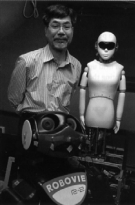
Japanese researchers
have spent five years
developing a humanoid robot
system that can understand
[5] and respond to simultaneous
speakers. They posit a
restaurant scenario in which
the robot is a waiter. When
three people stand before the
[10] robot and simultaneously
order pork cutlet meals or
French dinners, the robot
understands at about 70
percent comprehension,
[15] responding by repeating each
order and giving the total price. This process takes less
than two seconds and, crucially, requires no prior voice
training.
Such auditory powers mark a fundamental challenge
[20] in artificial intelligence – how to teach machines to pick out
significant sounds amid the hubbub. This is known as the
cocktail party effect, and most machines do not do any
better than humans who have had a few too many
martinis.
Scientific American, August 2007.
De acordo com o texto, pesquisadores japoneses desenvolveram um robô que