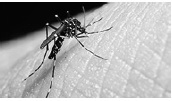
Who would have thought it? The Aedes
aegypti mosquito, a vector of dengue, zika and
chikungunya does have a good side. Researchers at
the University of São Paulo, USP, have discovered
5 anti-inflammatory substances in its saliva capable
of controlling immunity and treating intestinal
diseases, such as ulcerative colitis – in rodents, at
least.
The study, which took place at USP\'s Faculty
10 of Pharmaceutical Sciences in Ribeirão Preto,
gave rise to a doctoral thesis and an article
published in the scientific journal International
Immunopharmacology.
Researchers will now attempt to identify
15 the exact molecules in the saliva that have this
therapeutic action. According to the immunologist
who supervised the study, there is a "cocktail" of
substances in the saliva of the Aedes aegypti that
are still being identified. Once these molecules
20 have been identified, the aim is to extract them
and synthesize them in a laboratory, in order
to then study them in clinical trials with human
participants.
A professor at USP\'s Institute of Biomedical
25 Sciences is trying to raise funds to create a
company that would perform the pre-clinical trials
– testing on non-human animals, before the drugs
are tested on humans. After the identification and
sequencing of the molecule, production can either
30 be carried out using "biofabrics", made from fungi
or bacteria, or artificial synthesizers, depending on
the complexity of the molecule.
According to the professor , the new drug based on
mosquito saliva was also successful in the treatment
35 of diseases such as autoimmune hepatitis and
multiple sclerosis. As with ulcerative colitis, both
of these diseases have a significant inflammatory
element.
Disponível em: <www1.folha.uol.com.br/internacional/enscienceandhealth/2016/03/1745824-researchers-discover-that-mosquito-saliva-has-antiinflammatory-properties.shtml>. Acesso em: 22 abr. 2016. Adaptado.
The phrase from the text has not been suitably defined in