Leia o texto a seguir e responda à questão.
“Nobody, but nobody, is going to stop breathing on me.”
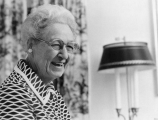
Today is the birthday of Dr. Virginia Apgar, who has helped make many, many, many birthdays possible. The pioneering doctor lived from June 7, 1909, to August 7, 1974, and is the subject of today’s Google Doodle. You can’t really go through medical school without knowing Apgar’s name, at least her last name. Here’s why
In 1952, Dr. Apgar unveiled the Apgar score. Besides being her last name, Apgar stands for the following five domains “Appearance, Pulse, Grimace, Activity, and Respiration” of the score. Basically 1 minute and 5 minutes after a baby is born, doctors, nurses, and midwives will score the baby from 0 to 2 (with 2 being the best) for each of these domains.
You then sum the 5 domain scores to get a sense of the baby’s overall health. If you do the math, you will see that the total score can range from a 0 to a 10 with a higher score being better. A baby rarely scores a 10, because most babies have at least blue hands and feet when they are born (hey, life ain’t easy and not everyone is the best at everything). A score of 7 or higher is normal. Lower than 7 merits immediate medical attention such as potentially oxygen, clearing out the airway, or physical stimulation to get the heart beating faster. Time may be all that the baby needs, since low scores at 1 minute frequently become normal at 5 minutes. Sometimes a doctor, nurse, or midwife may check an Apgar score 10 minutes after birth if any questions remain.
Of course, an Apgar score is only an immediate assessment and usually does not forecast either good or bad health in the future. So putting your good Apgar score on your resume will impress no one. A high Apgar score doesn’t necessarily mean that everything will be beer and candies from thereon. Similarly babies with low initial Apgar scores can go on to have very healthy lives.
While it may seem routine now, using a standardized way to check a baby’s health was not standard practice before Dr. Apgar invented the score. Newborn care was a lot more haphazard, making survival among infants, especially those born prematurely, more challenging.
It was an accomplishment for Dr. Apgar even to get to a position to make such an important invention. Back when she graduated from Mount Holyoke College in 1929 and then from the Columbia University College of Physicians and Surgeons in 1933, the “Apgar” score for the medical careers of women and minorities was very, very low. Very few were even allowed into medical school, let alone progress in their careers afterwards. But Dr. Apgar was a persistent pioneer, eventually becoming the first woman to achieve the rank of full professor at her medical university in 1949. Things aren’t smooth sailing for women and minorities today in medical and academic careers. But you can thank Dr. Apgar for at least making some initial inroads.
Therefore, if you entered this world after the 1950’s (and assuming that you were born rather than spontaneously generated), you can use Dr. Apgar’s birthday to thank Dr. Apgar for people checking you on your birthday.
(Adaptado de: LEE, B. Y. How Today’s Google Doodle, Dr. Virginia Apgar, Made A Big Difference In: Forbes (online) Pharma and Healthcare. 7 jun. 2018. Disponível em: Acesso em: 18 ago. 2018.)
Em relação ao Teste de Apgar, assinale a alternativa correta.