Leia o texto abaixo e marque a ideia central.
Astronomers have evidence for black holes in nearly every galaxy in the universe
Although1 no black hole is close enough to Earth to pull the planet into its depths, there are so many black holes in the universe that counting them is impossible. Nearly every galaxy — our own Milky Way as well as the 100 billion or2 so other galaxies visible from Earth — shows signs of a black hole.
Of the billions of stars in the Milky Way, about one in every thousand new stars is massive enough to become a black hole. Our sun isn’t. But3 a star 25 times heavier is. Stellar-mass black holes result from the death of these stars, and4 can exist anywhere in the galaxy.
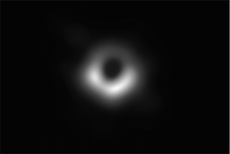
Supermassive black holes — a million to a billion times more massive than our sun — exist only in the center of a galaxy. At the center of the Milky Way, 26,000 light-years from Earth, scientists are hoping to make an image of Sagittarius A*, which is believed to be our own supermassive black hole, with the mass of four million suns. How supermassive black holes form is still a mystery.
https://www.nytimes.com/interactive/2015/06/08/science/space/guide-to-black-holes.html
Segundo os astrônomos:
I - Há milhões de estrelas na Via Láctea.
II - Há buracos negros em todas as galáxias do universo.
III - Cerca de uma em cada mil novas estrelas pode tornar-se um buraco negro.
IV - O centro da Via Láctea encontra-se a cerca de 26.000 anos luz da Terra.
V - Acredita-se que Sagittarius A* seja o nosso buraco negro supermassivo com uma massa de quatro milhões de sóis.
É correto apenas o que se afirma em