Leia o texto para responder à questão.
Humans exploiting and destroying nature on unprecedented scale
Wildlife populations are in freefall around the world, driven by human overconsumption, population growth and intensive agriculture, according to a major new assessment of the abundance of life on Earth.
On average, global populations of mammals, birds, fish, amphibians and reptiles fell by 68% between 1970 and 2016, according to the WWF and Zoological Society of London (ZSL)’s biennial Living Planet Report 2020. Two years ago, the figure stood at 60%.
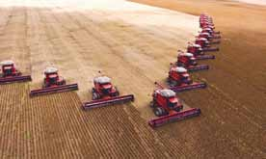
The research is one of the most comprehensive assessments of global biodiversity available and was compiled by 134 experts from around the world. It found that from the rainforests of central America to the Pacific Ocean, nature is being exploited and destroyed by humans on a scale never previously recorded. Deforestation and the conversion of wild spaces for human food production have largely been blamed for the destruction of Earth’s web of life.
The report highlights that 75% of the Earth’s ice-free land has been significantly altered by human activity, and almost 90% of global wetlands have been lost since 1700. Using satellite analysis, the report also finds that wilderness areas – defined as having no human imprint – only account for 25% of the Earth’s terrestrial area and are largely restricted to Russia, Canada, Brazil and Australia.
Tanya Steele, chief executive at WWF, said: “We are wiping wildlife from the face of the planet, burning our forests, polluting and over-fishing our seas and destroying wild areas. We are wrecking our world – the one place we call home – risking our health, security and survival here on Earth.”
(Patrick Greenfield. www.theguardian.com,10.09.2020. Adaptado.)
In the excerpt from the last paragraph “We are wrecking our world”, the underlined word can be replaced, with no change in meaning, by