Text
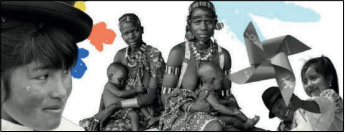
PHOTO: UN Composition with photographs by PAHO (left), Martine Perret (center) and UNICEF Ecuador-Arcos (right).
The role of indigenous women in the preservation and transmission of traditional knowledge
1 Indigenous women are the backbone of indigenous peoples” communities and play a crucial role in the preservation and
transmission of traditional ancestral knowledge. They have an integral collective and community role as carers of natural
resources and keepers of scientific knowledge. Many indigenous women are also taking the lead in the defense of indigenous
peoples' lands and territories and advocating for indigenous peoples' collective rights worldwide.
2 However, despite the crucial role indigenous women play in their communities as breadwinners, caretakers, knowledge
keepers, leaders and human rights defenders, they often suffer from intersecting levels of discrimination on the basis of
gender, class, ethnicity and socioeconomic status.
3 Indigenous women particularly suffer high levels of poverty; low levels of education and illiteracy; limitations in the access to
health, basic sanitation, credit and employment; limited participation in political life; and domestic and sexual violence.
Besides, their right to self-determination, self-governance and control of resources and ancestral lands have been violated
over centuries.
4 Small but significant progress has been made by indigenous women in decision-making processes in some communities,
achieving leadership in communal and national roles, and stood on the protest frontlines to defend their lands and the
planet's decreasing biodiversity. The reality, however, remains that indigenous women are widely under-represented,
disproportionately negatively affected by decisions made on their behalf, and are too frequently the victims of multiple
expressions of discrimination and violence.
5 This International Day of Indigenous Peoples, let's reclaim the role of these heroines.
Disponivel em: https://www.un.org/en/observances/indigenous-day. Acesso em 13/06/2022. Adaptado.
Observe a análise linguística a seguir:
I. No 2º parágrafo, o autor elabora sua argumentação, situando a temática na atualidade, por isso o tempo verbal predominante é o Simple Present.
II. As palavras land e territories, no 1º parágrafo, apresentam significados distintos, estabelecendo quase uma relação de antonímia nesse contexto.
III. No 4º parágrafo, as palavras destacadas (but e however) são conectores ou linking words, que apresentam ideia de conclusão e adição respectivamente.
IV. No 2º parágrafo, a palavra ‘breadwinnwers' significa 'provedoras' e está sendo empregada para dimensionar o papel das mulheres indígenas.
V. O 3º parágrafo “Indigenous women particularly suffer high levels of poverty; low levels of education and illiteracy; limitations in the access to health, basic sanitation, credit and employment (...)” apresenta vários adjetivos, pois estão se referindo ou qualificando os substantivos pospostos, conforme regra de uso da língua inglesa.
Estão CORRETAS apenas