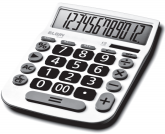
TEXTO:
Calcuholism
It has been said that many people are victims of
calcuholism, a dependence on the use of calculators,
causing a diminished ability to do mathematics on
one’s own. Technology in schools, offices, and industry
[5] has resulted in an unfortunate overdependence
on all types of modern devices, but particularly on
calculators, Calcuholism can be avoided if schools
and individuals concentrate on using the mind to do
mathematics rather than relying on calculators for
[10] simple tasks.
Obviously the term calcuholism has been coined
with the intent to compare it to other addictions such
as alcoholism. While it is not nearly as serious as
alcoholism, dependence on the calculator can be
[15] harmful. Abuse of something normally beneficial may
lead to a harmful reliance on it. It is not that calculators
are harmful, but overuse may cause harm by making
people forget how to do mathematics with their own
minds.
[20] The problem arises from modern technological
advances. In schools, classes become more
complicated because of the technology for which
students must be prepared when they graduate.
Calculators are permitted and essential in many
[25] classes. In offices, calculators, computers, and word
processing systems are commonplace because they
increase speed and improve efficiency. Business
people may spend hours working with numbers
and rarely calculate mentally. In industry as well,
[30] the emphasis on advanced machines results in
individuals’ solving fewer mathematical problems on
their own.
To alleviate the problem, schools should
avoid allowing students to use calculators too
[35] early and should require sufficient in-class work
without them. All of us should restrict our use of
calculators and strive to do math on our own so that
we will not lose our basic math skills.
Calcuholism has increased in recent years
[40] and will continue to increase due to advances
in technology. To avoid dependency, we must
do mathematics with our minds from time to time rather
than with a machine.
PYLE, Michael A. & PAGE, Mary Ellen Muñoz. Test of English as a foreign language. U.S.A. s.d. p. 641.
If we ______ our minds more often, we ______ addicted to calculators.
According to the main idea of the text and the verb tense correlation, the verbal forms which suitably complete the blanks of this sentence are