TEXTO:
A rodent that never gets cancer could hold the key
to preventing or treating malignant tumors, say
scientists. A team led by researchers from the University
of Rochester, New York, US, investigated the anti-cancer
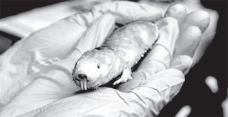
[5] properties of the naked mole-rat.
The US team cultured skin cells from the rodent in
the laboratory. They found that the animal’s tissues were
rich in high molecular weight hyaluronan (HMW-HA), a
gooey sugar that is involved in tissue repair. The
[10] researchers think the substance gives the naked molerat
its distinctive, elastic “baggy” skin, which it needs to
squeeze through underground tunnels. Experiments
show that when HMW-HA is removed from naked molerat
cells, they become susceptible to cancer, suggesting
[15] it plays a role in making the rodent “cancer-proof”.
Naked mole-rats can live for around 30 years, an
age unprecedented in small rodents. Mice, in
comparison, live for no longer than 4 years. The rodent
has no fur and spends its life living underground in dark
[20] tunnels in a colony. While it has probably evolved to
provide the rodent with an exceptionally flexible skin, it
also gives protection against cancer, possibly by stopping
cancerous cells from dividing.
The next step, they say, is to test the chemical in
[25] mice, then human cells. “There’s indirect evidence that
HMW-HA would work in people. It’s used in anti-wrinkle
injections and to relieve pain from arthritis in knee
joints, without any adverse effects. Our hope is that it
can also induce an anti-cancer response,” they say.
[30] Commenting on the research, Oliver Childs of
Cancer Research UK said:”They’re not going to win any
beauty contests, but these curious creatures have long
interested scientists because of their exceptionally
lengthy life spans and resistance to cancer. This
[35] fascinating research builds on previous work revealing
the biological tricks mole-rats have evolved to prevent
cancer. It’s a long way off, but it will be interesting to see
if further research can find a way to use hyaluronan to
help prevent or treat cancer in humans.”
A RODENT That...Disponível em:www.bbc.co.uk/news/health-22961694 Acesso em: 12 out. 2016. Adaptado.
Considering the use of the substance HMW-HA in humans, the scientists think that it