TEXTO:
Upgrading our biology may sound like science
fiction, but attempts to improve humanity actually date
back thousands of years. Every day, we enhance
ourselves through seemingly mundane activities such
[5] as exercising, meditating, or consuming performanceenhancing
drugs, such as caffeine or adderall. However,
the tools with which we upgrade our biology are
improving at an accelerating rate and becoming
increasingly invasive.
[10] Not long ago, Elon Musk announced a new
company, Neuralink, with the goal of merging the human
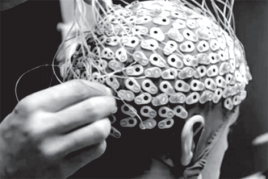
mind with AI (Artificial Intelligence). The past few years
have seen remarkable developments in both the
hardware and software of brain-machine interfaces.
[15] Experts are designing more intricate electrodes while
programming better algorithms to interpret neural
signals. Scientists have already succeeded in
enabling paralyzed patients to type with their minds, and
are even allowing brains to communicate with one
[20] another purely through brainwaves.
A major ethical concern is equality. As with any
other emerging technology, there are valid concerns
that cognitive enhancement tech will benefit only the
wealthy, thus exacerbating current inequalities. It’s
[25] important to discuss these risks, not so that we begin
to fear and avoid such technologies, but so that we
continue to advance in a way that minimizes harm and
allows us to optimize the benefits.
BIDSHAHRI, Raya. Disponível em: https://geneticliteracyproject.org/ 2018/02/20/brain-machine-interfaces-biology-body-upgrades-waywill-handle/. Acesso em: 13 jun. 2018.
Considering the cognitive enhancement technology, the author