Spilt Milk by Chico Buarque: review
A mishmash of influences gives rise to a vivid portrait of Brazil
By Ian Thomson
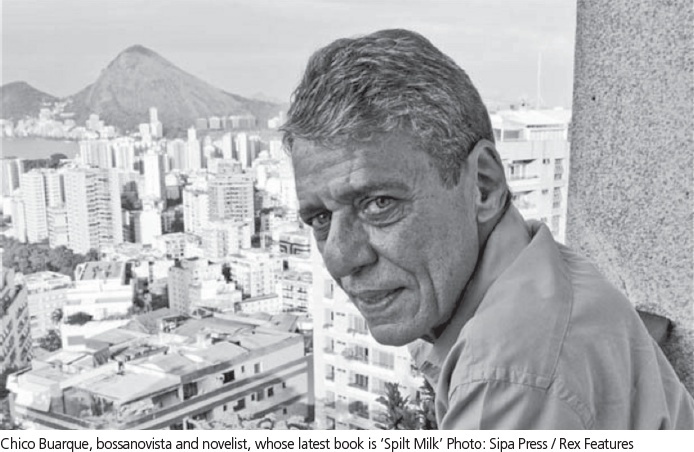
Back in the Sixties, Brazil thrilled to a new dance beat called bossa nova. With its languid jazz tones, the music had a hushed intensity and underlying air of sadness. Chico Buarque, a leading bossanovistasongwriter and novelist, is revered in Brazil as a political hero. In 1968, he was imprisoned by the military for “counter-culture activities”.
Spilt Milk, Buarque’s fourth novel, displays a typically Brazilian mishmash of influences ranging from memoir to adventure to political diatribe. A crotchety old man, Eulálio d’Assumpção, lies moribund in a Rio de Janeiro hospital, musing on his life while lashing out at stenographers and “spiteful” orderlies. The food, we learn, reeks unpleasantly of garlic (“Wait till my mother finds out”).
Aged 150, he has come down in the world wretchedly. In pages of rambling monologue, the improbably old narrator describes the decline of his family over generations of Brazilian history. Amid sagas of political tribalism and grievous dictatorship, plantation-owning forebears have squandered fortunes on drink, drugs and armament deals. A souring smell of “spilt milk” hangs over the narrative as it twists round half-remembered family feuds and hatreds.
Along the way, Buarque paints an exceptionally vivid picture of Brazilian high society in the 1890s, with its German governesses, imported French clothes and Chopin waltzes. Though bedbound and drugged, Eulálio recalls the love of his life, Matilde, whose cinnamon-coloured skin and “Moorish eyes” had worked a fatal charm on him years ago. Where is she now? At first glance, Spilt Milk appears to be in narrative disarray, as the book wanders backwards and forwards in time. Eventually, though, the inchoate strands cohere into an absorbing, if bitter, meditation on Brazil.
Just as bossa nova had borrowed from samba and West Coast jazz, so Buarque borrows from Samuel Beckett, Gabriel García Marquez and others. In a now-famous book of 1928, Manifesto Antropófago, Brazil’s leading modernist poet Oswald de Andrade had defined Brazilian literature as anthropophagic, or cannibalistic, “eating” other forms of European and African writing. Spilt Milk, brocaded with a range of literary influences, conforms to the ideal beautifully.
Source: http://www.telegraph.co.uk/culture/books/fictionreviews/9573627/Spilt-Milk-by-Chico-Buarque-review.html
Choose the statement that is true about the book review.