SABIÁ VIRUS
Epidemiology and History
Only one known case of naturally contracted Sabiá virus infection has been documented, yet the virus remains important due to at least two laboratory infections that have occurred.
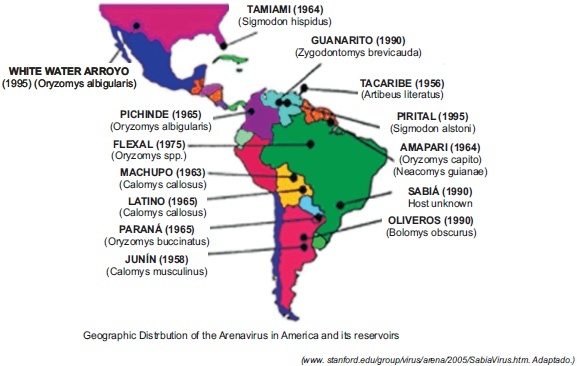
The original natural case of Sabiá virus infection occurred in a woman staying in the village of Sabiá (Cotia), outside of Sao Paulo, Brazil, in 1990. In this instance, severe liver damage led physicians to an initial diagnosis of yellow fever. However, this was soon ruled out through a thorough blood test. Following the patient's death, the agent was identified as a then unknown Arenavirus.
The virologist who was responsible for this identification, however, contracted the disease as during the course of his research; he, fortunately, survived. Four years later, while working under level 3 biohazard conditions, a researcher at the Tropical Medicine Clinic at Yale-New Haven Hospital was exposed to the virus. Exposure apparently resulted when a centrifuge bottle containing infected tissue cracked and leaked into the spinning centrifuge, releasing aerosolized virus particles into the air. New World Arenaviruses, or those members of the family that are endemic to the Americas, are being discovered at a rate of close to one every three years, a fact that brands Sabiá and its cousins as some of the most important emerging viruses of their regions.
Transmission
Like other New World Arenaviruses, transmission is assumed to be via aerosolized virus particles. Close contact with infected individuals or suspected animal reservoirs or vectors are key factors in Sabiá diagnosis. Though the animal reservoir is as yet unknown, a rodent found throughout the region surrounding the small village of Sabiá has been implicated. In the history of the virus, laboratory-related infection has been a primary method of transmission; therefore, utmost caution is needed when handling the virus in a laboratory setting.
Os Arenavirus do Novo Mundo