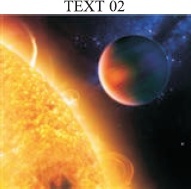
Despite the growing catalog of extrasolar planets, data so far do not alter estimates that we are effectively on our own
Howard A. Smith
There has often been the assumption, even amongst astrophysicists, that because the universe is infinitely large, there must be somewhere else in it a planet with conditions hospitable to intelligent life. Recent surveys locating a number of extrasolar planets may seem to bolster this conclusion. The author, however, argues that the new data only reinforces the conclusion that humans are alone in the universe, at least for all practical purposes. Smith points out that even if we were to wait for signals that would not reach us for 100 human generations, we still would not be able to detect any messages from farther than 1,250 light-years away, a relatively small pocket of the universe. He goes on to extrapolate from available data on extrasolar planets to conclude that the number of even vaguely suitable stars with possible habitable planets within that distance is slight-and even then, the chances of life evolving to intelligence are much slimmer. He concludes by considering how humans should respond to the idea that even if there is intelligent life somewhere out there, we'll likely never know about it.
(http://www.americanscientist.org/issues/feature/ZO1 1/4/ alone-in-the- universe)
(http://www.americanscientist.org/issues/feature/ZO1 1/4/ alone-in-the- universe)
According to Howard Smith: