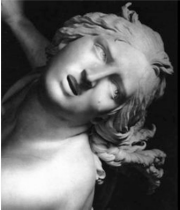
There are works of art which grasp you, capture
you, which leave you defenseless, unable to breathe. Like
The Rape of Proserpina by Gian Lorenzo Bernini.
Go into the great and splendid hall of the Borghese
[5] Gallery, at the centre of which stands this work of art, and
you see nothing else.
You do not see the walls lined with precious marble
and minute mosaics. You do not see the sculptures and
furnishings which occupy the space around you.
[10] You just try to reach the statue as quickly as you
can and when you do, you are looking at a static, white
mass thrashing violently in front of you.
You lose control of your emotions and, if you
could, you would cry.
[15] Because beauty is this. Not existing, but feeling.
Contemplating only what enthralls and captivates most.
Words are meaningless. Only silence.
And then, the tears. Those two tear drops which
slowly trickle down her cheek which make you understand
the absolute significance of the work.
[20] The desperate, inconsolable pain is contained in
those two tears and in the sound of a voice that you cannot
hear and in leaving Proserpina, who you want to help, to
set free, but are powerless to do so, because it is already
[25] over. It is done and Bernini has merely sculpted it.
Claudia Viggiani. Proserpina’s tears. Translated by Steve Barley. Internet: claudiaviggiani.it (adapted).
Using the text above as reference, judge the following item.
In the last paragraph, the pain contained in those two tears and in the sound of a voice that you cannot hear may be interpreted as the pain felt by the statues admirer, who has no power to help the crying girl.