TEXT
Immunization
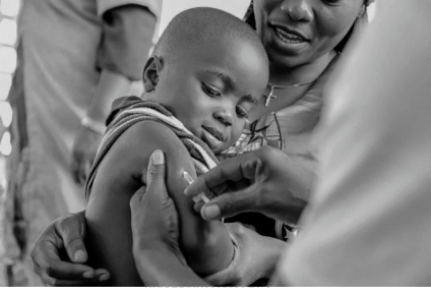
Vaccines are the world's safest method to protect children from life-threatening diseases.
UNICEF/UN0287582/Diefaga
Vaccines are among the greatest advances in global health and development. For over two centuries, vaccines have safely reduced the scourge of diseases like polio, measles and smallpox, helping children grow up healthy and happy. They save more than five lives every minute – preventing up to three million deaths a year, even before the arrival of COVID-19.
Thanks to immunization efforts worldwide, children are able to walk, play, dance and learn. Vaccinated children do better at school, with economic benefits that ripple across their communities. Today, vaccines are estimated to be one of the most cost-effective means of advancing global welfare.
Despite these longstanding benefits, low immunization levels persist. Some 20 million children miss out on life-saving vaccines annually. The most poor and marginalized children – often most in need of vaccines – continue to be the least likely to get them. Many live in countries affected by conflict, in remote areas, or where polio remains endemic.
Low immunization rates also compromise progress in areas of maternal and child health and well-being. In 2019, the World Health Organization (WHO) declared vaccine hesitancy to be one of the top threats to public health. While vaccine hesitancy is as old as vaccination itself, the nature of the challenge continues to shift with the social landscape. Today, vaccine hesitancy and the ‘infodemic’ it fuels are key drivers of under-vaccination across the globe.
Adapted from https://www.unicef.org/immunization#covid-19. Accessed on September 6th, 2021.
“Vaccinated children do better at school, with economic benefits that ripple across their communities.” A synonym for ripple is