Leia o texto a seguir e responda à questão.
ER at 25: a matter of life, death – and George Clooney
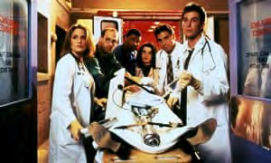
ER is 25 years old. And this means you should all drop whatever you’re doing now and dedicate the next 331 hours of your life to reminding yourself what an incredible series it was. The overwhelming majority of shows from the past 25 years would be dramatically different if it wasn’t for ER.
Of course, this might not be entirely evident when you first watch it. Stumble across the wrong episode and you might be bewildered by its sentimentality, or the ridiculous matinee-idol looks of its cast. But this is to be expected. Like other shows that were groundbreaking at the time, the wider culture has subsequently absorbed what made ER so great and spread it wide across everything it could. There are elements of ER in almost every TV programme you’ve watched in the last 20 years.
Then came ER. The first episode arrived like a hammer attack. A building collapses within the first four minutes, sending the cast into a frenzy of quick-fire medical jargon as a nervous percussive score kicks in. Stretchers flood into the hospital. We see the walls and ceiling of the hospital from the viewpoint of a wheeled-in patient. Teams of doctors attend to multiple people, communicating in long streams of deep-cut hospital terminology, punctuated by short reassurances. It’s a whirling, breathless sequence that leaves both the camera and the audience racing to keep up. When it finally comes to an end, shaking with tears after seven or eight minutes, everything else on television felt it came from another planet.
Better yet, despite its influence, ER holds up incredibly well today. Although it would eventually succumb to a comfortable soapiness, the propulsive set-pieces are still remarkably sophisticated. They’re not just technically impressive but, in their refusal to lead viewers by the hand, they laid the seeds for almost every show you love today. You couldn’t just watch ER the old way, letting it flop across your eyes like wallpaper. You had to actively be a participant to get the most out of it.
(Adaptado de: HERITAGE, Stuart. ER at 25: a matter of life, death – and George Clooney. In The Guardian (online). 19 set. 2019. Disponível em: . Acesso em: 26 set. 2019.)
Com relação ao texto, atribua V (verdadeiro) ou F (falso) às afirmativas a seguir.
( ) A frase “Stumble across the wrong episode [...] the ridiculous matinee-idol looks of its cast.” aponta falhas persistentes no enredo da série que prejudicam o desenvolvimento da trama.
( ) A expressão grifada em “The first episode arrived like a hammer attack.” é uma metáfora da surpresa causada nos espectadores do primeiro episódio da série.
( ) Em “Although it would eventually succumb to a comfortable soapiness,”, a expressão grifada indica um aspecto negativo da série na opinião do autor do texto.
( ) Em “You couldn’t just watch ER the old way, letting it flop across your eyes like wallpaper.”, a frase grifada tem a função de explicar “the old way” na oração anterior.
( ) O trecho “You had to actively be a participant to get the most out of it” sugere que a série permitia que o telespectador interferisse no enredo.
Assinale a alternativa que contém, de cima para baixo, a sequência correta.