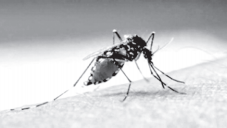
TEXTO:
Scientists have found a potential treatment option
for Zika that may protect babies from developing a severe
birth defect, according to a new study from Yale University.
The researchers found that the virus disrupts pTBK1,
[5] a protein that helps spur cell division in the growing brain.
This causes the cells—which are essential for setting
up the structure of the brain—to die, instead of multiply,
and the virus also attacks these neural stem cells directly.
Without these crucial cells, the brain isn’t able to fully
[10] develop, and microcephaly occurs.
Armed with this new understanding, the researchers
decided to test out a few existing antiviral treatments.
Some of these treatments were ineffective on the lab
cells, others actually made the infection worse, but two
[15] managed to stop the replication of Zika virus cells,
protecting the neural stem cells from further damage.
One of the treatments, Sofosbuvir, is already an FDAapproved
drug used to treat Hepatitis C. Though this is
promising, a lot more work needs to be done before a
[20] Zika treatment is confirmed, the researchers cautioned.
Zika has been spreading rapidly throughout Latin
America since the outbreak was first identified in Brazil
last year. Currently, 56 nations are
experiencing outbreaks, according to the CDC (Centers
[25] for Disease Control), and local transmission arrived in
Miami earlier this summer. Though the vast majority of
people infected with Zika have no symptoms, or only get
a mild flu-like infection, Zika can cause microcephaly in
some pregnant women and that threat has caused the
[30] greatest concern. Children born with microcephaly can
have physical and developmental disabilities or face early
death or miscarriage.
Luckily, research like this helps us understand how
Zika works, which means that, even if Sofusbuvir isn’t
[35] the right option, scientists now have a better chance at
finding a treatment that does work. Combined with
ongoing research on vector control and the rapid
development of a vaccine, there’s hope that future children
can be protected from Zika.
SCIENTISTS have. Disponível em: <motherboard.vice.com/read/scientistshave-found-a-possible-way-to-protect babies-from-zika>. Acesso em: 12 out. 2016
The only question to which there is no answer in the text is