TEXTO:
Japanese scientists say they have created healthy
baby mice from eggs they made entirely in the lab using
a sample of mouse skin cells. The pups born from the
eggs appeared to be healthy and were able to go on to
[5] have babies themselves.
Experts say the findings offer future hope of artificial
eggs for couples who need fertility treatment. But they
say many more years of study is needed to make that
leap to humans.
[10] Scientists have already been able to make sperm
in the lab, but for that feat they used an immature
embryonic stem cell, which is known to be able to morph
into any type of cell. Taking a grown-up skin cell and
getting it to change into an egg is more challenging, say
[15] experts. The Japanese team, Prof Katsuhiko Hayashi
and colleagues, took cells from a mouse tail and
reprogrammed these adult cells back into immature ones.
Then, they coaxed these immature stem cells to become
an egg.
[20] Not all of the eggs that they made in the lab were
healthy or viable. But the ones that were could be fertilized
by sperm in a dish. When these fertilized eggs were put
into the wombs of adult female mice, they developed
into apparently healthy babies.
[25] Experts warn there are many barriers to using the
same method in humans. Some are technical, but
arguably the biggest ones are about safety and ethics.
Flaws in artificial eggs might be passed on to future
generations, for example.
[30] Prof Azim Surani has been studying how to turn
human skin cells into the precursors of sperm and eggs
in his lab. He said: “As far as humans are concerned, we
are way behind. We can’t be sure the same will apply
with human cells.”
ROBERTS, Michelle. Health editor, BBC News online. Disponível em: . Acesso em: 12 out. 2016.
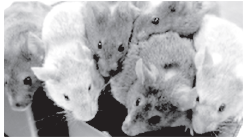
The mice mentioned in the text were