Read the TEXT below and answer the questions that follow.
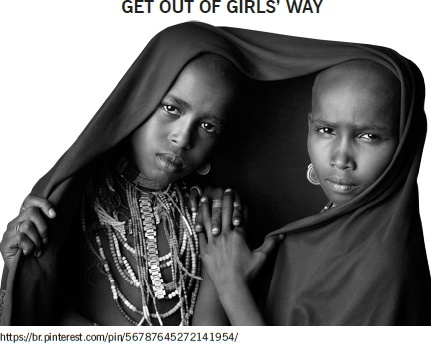
It isn’t easy being a girl, especially in Africa. […] To help them, we need not do anything complicated: we just need to get out of their way. Too many girls still hit barriers accessing fundamental rights. […] Three areas strike me as particularly ready for change: education, health and sanitation. And change should start in 2017.
First, education. […]. Despite major gains in primary education, girls attend secondary school and university in far fewer numbers than boys. […] Why is that? Girls face barriers to learning that boys don’t often have to contend with.[…] Social and cultural norms such as early marriage and pregnancy, and parental bias towards sons, also often cause girls to drop out. […] Countries with higher levels of discrimination in general against women performed worse on development indicators, including education. Yet we know how to demolish these barriers: among other things, improve school infrastructure, promote gender-sensitive curricula, make the cost of attending school affordable and end child marriage. […]
Second: health. Infectious disease like HIV/AIDS, tuberculosis and malaria, and conditions related to malnutrition, disproportionately affect girls and young women, either as sufferers or caregivers. These make it far harder for them to attend school or work. […] The hidden epidemic of poor nutrition undermines all aspects of women’s well-being […] But we have failed to invest in eradicating undernutrition.[…]
Lastly sanitation. An estimated 2.4 billion people live without adequate sanitation. This poses enormous obstacles every day for young women across sub-Saharan Africa. […]
Today’s young women, who are hungry for the chance to build a better world, still face the looming barriers of inequality. Let’s give them wings to fly.
Yvonne Chaka Chaka, The World in 2017
First, education. […]. Despite major gains in primary education, girls attend secondary school and university in far fewer numbers than boys. […] Why is that? Girls face barriers to learning that boys don’t often have to contend with.[…] Social and cultural norms such as early marriage and pregnancy, and parental bias towards sons, also often cause girls to drop out. […] Countries with higher levels of discrimination in general against women performed worse on development indicators, including education. Yet we know how to demolish these barriers: among other things, improve school infrastructure, promote gender-sensitive curricula, make the cost of attending school affordable and end child marriage. […]
Second: health. Infectious disease like HIV/AIDS, tuberculosis and malaria, and conditions related to malnutrition, disproportionately affect girls and young women, either as sufferers or caregivers. These make it far harder for them to attend school or work. […] The hidden epidemic of poor nutrition undermines all aspects of women’s well-being […] But we have failed to invest in eradicating undernutrition.[…]
Lastly sanitation. An estimated 2.4 billion people live without adequate sanitation. This poses enormous obstacles every day for young women across sub-Saharan Africa. […]
Today’s young women, who are hungry for the chance to build a better world, still face the looming barriers of inequality. Let’s give them wings to fly.
Yvonne Chaka Chaka, The World in 2017
Second: health. Infectious disease like HIV/AIDS, tuberculosis and malaria, and conditions related to malnutrition, disproportionately affect girls and young women, either as sufferers or caregivers. These make it far harder for them to attend school or work. […] The hidden epidemic of poor nutrition undermines all aspects of women’s well-being […] But we have failed to invest in eradicating undernutrition.[…]
Lastly sanitation. An estimated 2.4 billion people live without adequate sanitation. This poses enormous obstacles every day for young women across sub-Saharan Africa. […]
Today’s young women, who are hungry for the chance to build a better world, still face the looming barriers of inequality. Let’s give them wings to fly.
Yvonne Chaka Chaka, The World in 2017
Lastly sanitation. An estimated 2.4 billion people live without adequate sanitation. This poses enormous obstacles every day for young women across sub-Saharan Africa. […]
Today’s young women, who are hungry for the chance to build a better world, still face the looming barriers of inequality. Let’s give them wings to fly.
Yvonne Chaka Chaka, The World in 2017
Today’s young women, who are hungry for the chance to build a better world, still face the looming barriers of inequality. Let’s give them wings to fly.
Yvonne Chaka Chaka, The World in 2017
The central idea of TEXT is that