Read the text below and answer the following question according to it:
Losing Touch With the Patient
By PAULINE W. CHEN, M.D.
Published in the NYTimes.com: October 21, 2010
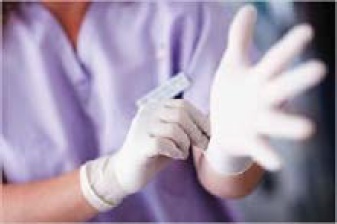
Several years ago I helped care for a man who had been hospitalized with a severe infection of the abdominal wall. When his primary doctors discovered that the bacteria responsible was resistant to most antibiotics, they quickly isolated him, moving him into a single room with a sign on the door proclaiming “Contact Precautions” and directing visitors to put on gloves, mask and gown before entering.
As the weeks wore on, we clinicians found ourselves minimizing our interactions, designating one team member to suit up and complete the work needed or shouting out updates and questions to the patient from the sterile safety of the doorway.
Increasingly isolated in these ways, he began to withdraw from everyone except his wife. His once daily declarations that he was going to “beat this infection” became less vocal, dimming to whispers, then disappearing altogether. He stopped turning to face us when we called out to him, choosing instead to continue staring blankly at the ceiling.
When he finally died, from cardiac arrest, more than two months later, it was hard not to remember the weeks leading up to his death and to wonder about one thing. In trying so hard to contain the infection, had we lost sight of the person?
According to Dr. Leif Hass, a family practice physician working as a hospitalist at the Alta Bates Summit Medical Center in Oakland, California, some type of contact barrier is definitely in the life of doctors and patients, even though, “there are times when an Intensive Care Unit looks like an assembly plant in Silicon Valley.” And while physicians will be forced to rely less on touch and more on other communication skills like listening and acknowledging, the risk remains that the presence of these physical — and technological — barriers will further eclipse some of the most effective ways in which doctors can alleviate the suffering of their patients.
“We just have to make sure, he said, that in the age of technology and rapid reforms, some of our best tools for healing — simple things like touching people and telling them you care and making them feel you are there for them — don’t get lost.”
Adapted from http://www.nytimes.com/2010/10/21/health/views/21chen.html?ref=health
Glossary
gown: veste de proteção
wore on: passavam
suit up: adaptar-se
withdraw: retrair-se
assembly plant: industria de montagem
healing: cura
As the weeks wore on, we clinicians found ourselves minimizing our interactions, designating one team member to suit up and complete the work needed or shouting out updates and questions to the patient from the sterile safety of the doorway.
Increasingly isolated in these ways, he began to withdraw from everyone except his wife. His once daily declarations that he was going to “beat this infection” became less vocal, dimming to whispers, then disappearing altogether. He stopped turning to face us when we called out to him, choosing instead to continue staring blankly at the ceiling.
When he finally died, from cardiac arrest, more than two months later, it was hard not to remember the weeks leading up to his death and to wonder about one thing. In trying so hard to contain the infection, had we lost sight of the person?
According to Dr. Leif Hass, a family practice physician working as a hospitalist at the Alta Bates Summit Medical Center in Oakland, California, some type of contact barrier is definitely in the life of doctors and patients, even though, “there are times when an Intensive Care Unit looks like an assembly plant in Silicon Valley.” And while physicians will be forced to rely less on touch and more on other communication skills like listening and acknowledging, the risk remains that the presence of these physical — and technological — barriers will further eclipse some of the most effective ways in which doctors can alleviate the suffering of their patients.
“We just have to make sure, he said, that in the age of technology and rapid reforms, some of our best tools for healing — simple things like touching people and telling them you care and making them feel you are there for them — don’t get lost.”
Adapted from http://www.nytimes.com/2010/10/21/health/views/21chen.html?ref=health
Glossary
gown: veste de proteção
wore on: passavam
suit up: adaptar-se
withdraw: retrair-se
assembly plant: industria de montagem
healing: cura
According to Dr. Leif Hass, a family practice physician working as a hospitalist at the Alta Bates Summit Medical Center in Oakland, California, some type of contact barrier is definitely in the life of doctors and patients, even though, “there are times when an Intensive Care Unit looks like an assembly plant in Silicon Valley.” And while physicians will be forced to rely less on touch and more on other communication skills like listening and acknowledging, the risk remains that the presence of these physical — and technological — barriers will further eclipse some of the most effective ways in which doctors can alleviate the suffering of their patients.
“We just have to make sure, he said, that in the age of technology and rapid reforms, some of our best tools for healing — simple things like touching people and telling them you care and making them feel you are there for them — don’t get lost.”
Adapted from http://www.nytimes.com/2010/10/21/health/views/21chen.html?ref=health
Glossary
gown: veste de proteção
wore on: passavam
suit up: adaptar-se
withdraw: retrair-se
assembly plant: industria de montagem
healing: cura
Glossary
gown: veste de proteção
wore on: passavam
suit up: adaptar-se
withdraw: retrair-se
assembly plant: industria de montagem
healing: cura
In “He stopped turning to face us when we called out to him, choosing instead to continue staring blankly at the ceiling.” (3rd paragraph), the underlined word refers to ___.