TEXT C
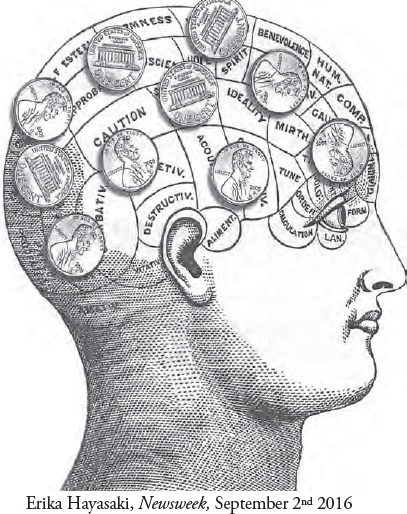
This is your brain on ‘POOR’
Poverty and the conditions that often accompany it – violence, excessive noise, chaos at home, pollution, malnutrition, abuse and parents without jobs – can affect the interactions, formation and pruning of connections in the young brain.[…] In one [study] researchers found that impoverished children had less gray matter – brain tissue that supports information processing and executive behavior – in their hippocampus (involved in memory), frontal lobe (involved in decision making, problem solving, impulse control, judgment, and social and emotional behavior) and temporal lobe (involved in language, visual and auditory processing and self-awareness).Working together, these brain areas are crucial for following instructions, paying attention and overall learning – some of the keys to academic success. […]
“We have [long] known about the social class differences in health and learning outcomes,” says Dr. Jack Shonkoff. […] But neuroscience has now linked the environment, behavior and brain activity – and that could lead to a stunning overhaul of both educational and social policies. […] “We are living in a revolution in biology now,” Shonkoff says, one in which new findings are finally giving us a real understanding of the interaction between nature and nurture.
“We have [long] known about the social class differences in health and learning outcomes,” says Dr. Jack Shonkoff. […] But neuroscience has now linked the environment, behavior and brain activity – and that could lead to a stunning overhaul of both educational and social policies. […] “We are living in a revolution in biology now,” Shonkoff says, one in which new findings are finally giving us a real understanding of the interaction between nature and nurture.
The central idea presented in TEXT C is that