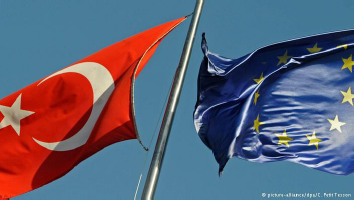
Eastern Europe opposed to EU refugee plan
Ahead of the EU-Turkey summit, Chancellor Merkel of Germany continues to aim for a pan-European solution to the refugee crisis. But some Eastern EU states have rejected the agreement – they don’t want to accept any refugees.
Hungarian Prime Minister Viktor Orban still spearheads the Visegrad states’ battle against a common EU refugee policy. In his speech to the country on Hungary’s national holiday, two days before the EU summit, Orban reiterated his position on the refugee crisis. He said he would not accept a redistribution of migrants from Turkey to Europe. About two-thirds of the population now supports his tough stance on refugee policy. Orban wants to decide in a referendum whether the Hungarians agree to the EU allocation quotas.
No illusions about political agenda
Other eastern European countries share the same view, especially the Czech Republic and Slovakia. That is why Gerald Knaus, an Austrian expert on Eastern Europe, told DW in interview that he was concerned about the upcoming EU summit. There will be a limited European solution to the refugee crisis, said Knaus, head of the think tank European Stability Initiative (ESI). In particular, the Hungarian ′ minister’s lobbying means that several countries have now adopted his policy.
“If Orban and the others stand on the edge and want to sabotage this because they have a different political vision of the future of refugee law, the future of Europe, then you can only remind yourself of this in the future and must not have illusions about the political agenda behind it; but that should not stop anyone”, said Knaus.
Romania hesitantly willing
Brussels is still hoping for a compromise. Some eastern EU countries, such as Romania and Bulgaria, do not want to support Orban’s position. However, their situation is different. Romania has not proven to be an El Dorado for refugees. The country does not belong to the Schengen area and the standard of living there is relatively low. Romania also is not on the standard Balkan route and not appealing as a potential transit country. Nevertheless, there are plans to boost border security, just in case the refugees themselves should look for new a detour on the way to Western Europe after other borders have been closed.
In September last year, Romania – just like the four Visegrad countries Poland, Hungary, Czech Republic and Slovakia – voiced its opposition to a mandatory refugee quota, but is not generally against receiving refugees. Romanian Prime Minister Dacian Ciolos would like the distribution mechanism to work on a voluntary basis, regardless of a state’s actual potential for accepting migrants and integrating them.
In early March, the first 15 refugees arrived in Romania via a “hotspot” in Greece. Overall, the country has promised to accept 6,351 refugees. This is not without controversy in the population. In a survey conducted last year, 75 percent of respondents were against the policy. On the other hand, the majority would agree to provide humanitarian assistance to war refugees from Syria.
Available at: http://www.dw.com/en/eastern-europeopposed-to-eu-refugee-plan/a-19121054. Accessed on: Sept. 18th, 2016 (Edited).
Mark the alternative that is not true about Romania.