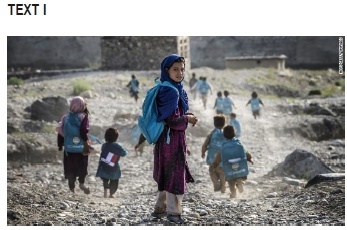
For many girls in Afghanistan, the simple act of walking to school can be a life-threatening journey. "You close the door behind you, and you enter a war zone," said Nushin Arbabzadah, an American-based author who was raised in Afghanistan. There were at least 185 documented attacks on schools and hospitals in Afghanistan last year, and the majority of those attacks were attributed to armed groups opposed to educating females. Some girls have been maimed by acid attacks. Others have had their drinking water poisoned or been targeted by bombers who think females should be forbidden from school -- as they were during the Taliban's rule.
Among the violence, however, there is promise: in a country where just 6% of women 25 and older have received any formal education, millions of girls are at long last enrolling in school. Today, more than 8.2 million children are going to schools like the one founded by Razia Jan. Jan and her team at the Zabuli Education Center are providing a free education to about 350 girls in rural Afghanistan. "Most of our students are the first generation of girls to get educated." Reports from humanitarian groups like UNICEF, Oxfam and Save the Children say that a great deal of progress has been made. "The overall education of girls in Afghanistan is a great success story," said Christine Roehrs, spokeswoman for Save the Children in Afghanistan.
One major area of focus is the number of female teachers. "In Afghan culture, parents don't consider it appropriate for girls to be educated by a man," Roehrs said. "There is a high dropout rate of young girls after the early grades because there are not enough female teachers". Another obstacle to girls' education is early marriage. The legal age for marriage is 16 in Afghanistan, but there have been many reports about girls being forced to marry well before that. In some cases, physical and emotional abuses keep girls out of the classroom. Many young women are accustomed to being hit and working as virtual slaves at home.
But female students still have high aspirations. In a recent Oxfam survey, more than 70% of the girls interviewed said they want to continue their education. "Once they enter the classroom, they are so involved being a student and trying to learn as much as they can," Jan said. "They want to learn. They want to get educated."
Source: Adjusted from CNN.com (http://edition.cnn.com/2012/09/26/world/asia/, visited on October, 2012)
Which of the following is NOT mentioned in the text?