TEXTO:
Archaeologists in Serbia say that they have
discovered a rare mammoth field containing the remains
of at least five of the giant beasts that lived here tens of
thousands of years ago. The discovery last week at the
[5] Kostolac coal mine, east of Serbian capital of Belgrade,
is the first of its kind in the region. It could offer important
insight into the ice age in the Balkans, said Miomir from
Serbia’s mammoth fragments in the world, but they are
rarely so accessible for exploration,” he told the
[10] Associated Press.
The remains were found during coal excavation
about 20 meters below ground, and the field, according
to Korac, stretches over some 20 acres of sandy terrain.
In 2009, a well-preserved skeleton of a much older
[15] mammoth was found at the same site. Vika — as the
female skeleton was dubbed — is up to one million years
old and belonged to the furless, so-called southern
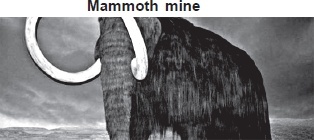
mammoth. The bones discovered last month probably
belong to the so-called woolly mammoth, which
[20] disappeared some 10,000 years ago, said Sanja Alaburic,
a mammoth expert from Serbia’s Museum of Natural
History. Alaburic explained that “this discovery is
interesting because, unusually, there are many bones
in one place,” probably brought there by torrential waters.
[25] Another mammoth skeleton was discovered in
northern Serbia in 1996. It belonged to a female mammoth
that lived about 500,000 years ago and is now on display
in the town of Kikinda, near the Hungarian border. As to
the new findings, Korac said that at least six months
[30] will be needed before all the bones are unearthed.
MAMMOTH mine. Disponível em: <www.huffingtonpost.com/2012/06/20/mammoth-mine-prehistoric-beasts-serbian-mine-n-1611860.html>. Acesso em: 12 out. 2012.
rarely so accessible for exploration,” he told the
[10] Associated Press.
The remains were found during coal excavation
about 20 meters below ground, and the field, according
to Korac, stretches over some 20 acres of sandy terrain.
In 2009, a well-preserved skeleton of a much older
[15] mammoth was found at the same site. Vika — as the
female skeleton was dubbed — is up to one million years
old and belonged to the furless, so-called southern
mammoth. The bones discovered last month probably
belong to the so-called woolly mammoth, which
[20] disappeared some 10,000 years ago, said Sanja Alaburic,
a mammoth expert from Serbia’s Museum of Natural
History. Alaburic explained that “this discovery is
interesting because, unusually, there are many bones
in one place,” probably brought there by torrential waters.
[25] Another mammoth skeleton was discovered in
northern Serbia in 1996. It belonged to a female mammoth
that lived about 500,000 years ago and is now on display
in the town of Kikinda, near the Hungarian border. As to
the new findings, Korac said that at least six months
[30] will be needed before all the bones are unearthed.
MAMMOTH mine. Disponível em: <www.huffingtonpost.com/2012/06/20/mammoth-mine-prehistoric-beasts-serbian-mine-n-1611860.html>. Acesso em: 12 out. 2012.
Fill in the parentheses with T (True) or F (False).
What makes the newly discovered mammoth fossils different from the one named Vika is that they
( ) must have been furry.
( ) aren’t as old as Vika.
( ) are all male skeletons.
( ) are thought to have disappeared about ten thousand years ago.
According to the text, the correct sequence, from top to bottom, is