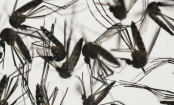
Zika linked to baby joint deformities
[1] Zika infection during pregnancy may cause limb joint deformities in the baby, experts now fear.
Brazilian researchers from Recife, the city at the centre of the Zika epidemic, describe seven suspect cases
in the journal The BMJ.
The virus, which has been spreading across much of the Americas and has deterred some people
[5] from visiting the Olympic host country, is already known to cause a serious baby brain defect.
Mothers-to-be are urged to be vigilant. Pregnant women should not travel to areas with Zika, and
those living in Zika zones should avoid the biting mosquitoes that carry and spread the disease.
Experts now agree that Zika is capable of causing lasting brain damage to babies in the womb. The
virus can cross the placenta from the mother to her unborn child. And there is growing evidence that it can
[10] trigger a rare, weakening condition of the nerves, called Guillian-Barre syndrome, in adults.
Dr. Vanessa van der Linden and her team in Brazil say they are now seeing limb joint problems in
newborn babies that might be caused by Zika too. The seven babies with suspected Zika infection that they
studied in hospital had been born with hip, knee, ankle, elbow, wrist and/or finger joint problems that fit
with a medical diagnosis called arthrogryposis.
[15] The deformities of arthrogryposis, or crooked joints, are caused by faulty muscles – some too tight
or contracted and some too flaccid – that have pulled and held the baby’s growing body in unnatural
positions.
Dr. Linden’s team suspect the Zika virus attacks brain nerve centres supplying the muscles around
the joints, rather than the joints themselves. Scans of the babies’ brains appear to support this idea.
[20] All of the seven babies they examined tested negative for other
congenital (pre-birth) infections, such as rubella and HIV, that might have
been a possible cause of their deformities. Most had microcephaly as well as
the limb deformities. Dr. Linden says that, since writing up her findings, she
has seen 14 more babies with similar problems and is running more tests.
[25] Prof. Jimmy Whitworth, from the London School of Hygiene and
Tropical Medicine, said that while not concrete proof, the evidence that Zika might be to blame was “pretty
compelling”. “Microcephaly is the most obvious sign of congenital infection with Zika, but it’s becoming
clear that’s just part of the whole spectrum of damage that can be caused by the virus.” He said the
challenge was stopping the spread of the infection and caring for those who will be affected in the long as
[30] well as the short term.
“Studies suggest the current epidemic could go on for three or four years,” Prof. Whitworth said.
“We think there’s going to be tens of thousands of babies who could be affected by Zika. Meeting their
physical and psychosocial needs will be the real challenge.”
Fonte: ROBERTS, Michelle. Zika linked to baby joint deformities. 10 ago. 2016. Disponível em: http://www.bbc.com/news/health-37010221. Acesso em: 17 set. 2016. Adaptado.
Os termos destacados no trecho “The deformities of arthrogryposis, or crooked joints, are caused by faulty muscles – some too tight or contracted and some too flaccid [...]” (linhas 15-16) classificam-se, respectivamente, em: