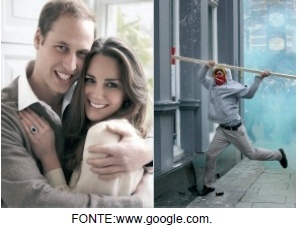
TIME FOR A ROYAL WEDDING ... WHILE ENGLAND IS ROYALLY SCREWED – A TALE OF TWO BRITAINS
Nearly a third of the world’s population will watch Prince William marry Kate Middleton in Westminster Abbey ________ April 29, or so reports in the British press predicting a television audience of more than 2 billion would have us believe. The souvenir tea towels have been printed, the mugs glazed, and a national holiday declared. For a whole day, Britain will play the game the world loves us for: royal Lilliput. Could this be the biggest role left to us? "Britain no longer ∃. It is a trace of what it used to be," Muammar Gaddafi said recently in one of his rants, and though this was in one way a speech too soon (a few of the missiles that hit Libya were British), there are many in Britain who would forgive the colonel his analysis.
The country is facing the biggest squeeze in living standards since the 1920s. Government budgets have been slashed in every direction. This year hundreds of thousands of public-sector workers will get the sack, while inflation, tax increases, and a steep reduction in welfare benefits will eat into the household incomes of nearly everyone else. A whole range of public institutions, from military airfields to public libraries, are closing or being sold off. What remains of the British Navy has been deprived of its last aircraft carrier (the HMS Ark Royal, now for sale on the Ministry of Defence’s version of eBay).
The country is used to the idea of national decline: "declinism" became a feature of British historical study many years ago—the U.S. is just now catching up. Public fears over the nation’s capability date back to at least the Boer War. Today, however, the country is filled with a sense of foreboding that I can’t remember paralleled in my lifetime. Two decades, the 1970s and ’80s, are often invoked as specters. The political right, which includes the coalition government, invokes an era of labor strikes ending with an IMF bailout when it says "we mustn’t go back to the ’70s." The left counters with a warning against the ’80s, when Margaret Thatcher remade Britain as a largely postindustrial society, privatizing swaths of the economy, abolishing union power, and wiping out manufacturing. But the events of neither decade threatened Britain’s idea of itself so completely as the debt exposed by the banking crash and the present government’s policy to restore economic confidence by slashing public programs.
In the text Muammar Gaddafi said in one of his rants that Britain no longer ∃. The only alternative that doesn’t stand for the meaning of the underlined word is