TEXT C
ARE VAMPIRES FOR REAL?
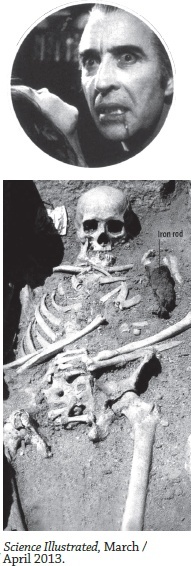
Vampires don’t exist, but in the past, myths about bloodsucking ghosts were common. Throughout the world, archaeologists have found graves containing humans who were believed to be vampires. One of the most recent discoveries was made in Bulgaria during the excavation of a church in Sozopol near the Black Sea, where scientists found two skeletons around 700 years old with iron rods through their chests.
The belief in vampires originated long before modern times. The earliest known account of vampirelike creatures is 4,000 years old and stems from Mesopotamia. About 500 years ago, the belief in vampires swept across Eastern Europe, spreading to Western Europe at a later point in time.
Count Dracula was based on a real person. The most famous vampire in history is Bram Stoker’s Count Dracula, who was inspired by Prince Vlad Tepes Dracula, ruler of Wallachia in Romania in the mid-1400s. Tepes means “the impaler” and the prince earned his nickname through his preferred means of executing his enemies by penetrating the body with a pole and erecting it, thereby impaling his victim.
The belief in vampires originated long before modern times. The earliest known account of vampirelike creatures is 4,000 years old and stems from Mesopotamia. About 500 years ago, the belief in vampires swept across Eastern Europe, spreading to Western Europe at a later point in time.
Count Dracula was based on a real person. The most famous vampire in history is Bram Stoker’s Count Dracula, who was inspired by Prince Vlad Tepes Dracula, ruler of Wallachia in Romania in the mid-1400s. Tepes means “the impaler” and the prince earned his nickname through his preferred means of executing his enemies by penetrating the body with a pole and erecting it, thereby impaling his victim.
TEXT C tells us that Prince Dracula of Wallachia earned his nickname “Tepes” because he