‘I wish they could be saved’:
The victims of India’s poisonous dust
Silicosis, which kills thousands around the world, is caused by inhaling silica dust found in rock, sand, quartz and many building materials. It can lead to breathing difficulties, regular coughing, chest pains and, sometimes, tuberculosis and other chest infections.
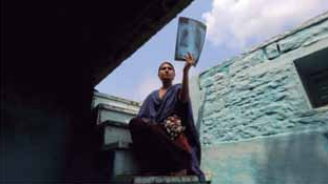
Two years ago, at the age of 17, Urmila Yadav, from the village of Budhpura, located in the north-western state of Rajasthan, became one of the youngest certified cases of silicosis in India. Her case is singular; even in this village where mining and quarry1 work is the only occupation and silicosis is a commonplace disease that strikes almost every family, it is mostly men who are affected.
Rajasthan has been the epicentre of silicosis in India. The number of silicosis certified patients in the state, according to government data, is 8441 (the figures are available up to April 2017). Actual numbers are likely to be much higher, claim advocacy groups. It is the only state to have a monetary relief mechanism for certified patients, in place since 2013; however, the onus is on workers to get a diagnosis and prove their occupational history, which is challenging in an unregulated industry like mining in India.
For a young teenage girl like Urmila to have silicosis is “quite an unusual case”, says Dr Vinod Jangid, responsible for diagnosing silicosis at the medical college in the district of Kota. There could be more children with silicosis but the government will hesitate to certify young people. “If children are diagnosed with silicosis, it means they are either living close to the mines, or they are working in the mines, both of which are illegal.”
Urmila began to work in the stone quarries next to her village in her childhood. It is common here for men to work in mines and for women and children to supplement the family earnings by carving cobblestones by hand. Most of them work in quarries and head back there after classes. “There are many girls in Budhpura who do this work. Some are 15 or 16 years, and some even younger. I wish they can be saved from this work,” Urmila says.
(Sunaina Kumar. www.bbc.com, 09.10.2017. Adaptado.)
1 quarry: an open excavation, usually for obtaining building material.
In the fragment from the third paragraph, “Actual numbers are likely to be much higher”, the word underlined carries the idea of