TEXTO:
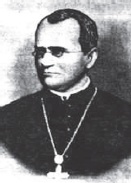
Gregor Mendel
1822-1884
Gregor Johann Mendel was
born on July 22, 1822, in
Heizendorf, Austria. He was the
only son of a peasant farmer. In
[5] 1843 he began studying at the St.
Thomas Monastery of the
Augustinian Order. After his
ordination, Mendel was assigned
to pastoral duties, but it soon
[10] became apparent that he was
more suited to teaching. In 1849,
he was assigned to a secondary
school in the city of Znaim. It was there that he took the
qualifying examination for teacher certification and failed.
[15] In 1851, he entered the University of Vienna to train to
be a teacher of Mathematics and Biology. It was there
that he developed his skills as a researcher which he
utilized later in his life.
Mendel did groundbreaking work into the theories
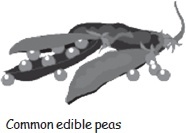
[20] of heredity. He studied seven basic characteristics of
the pea pod plants. By tracing these characteristics,
Mendel discovered three basic laws which governed the
passage of a trait from one member of a species to
another member of the same species.
[25] Mendel found actual proof of the existence of genes
and is considered to be the father of genetics.
Unfortunately, he was not recognized for his work by his
scientific peers and his findings were not given their real
importance until the early 1900s. His work and theories
[30] later became the basis for the study of modern genetics,
and are still recognized and used today.
MENDEL, Gregor. Disponível em: <http://www.mnsu.edu/emuseum/information/biography/klmno/mendelgregor.html. Acesso em: 20 maio 2010.
“Mendel did groundbreaking work into the theories of heredity.” (l. 19-20)
This sentence means that Mendel
“Mendel did groundbreaking work into the theories of heredity.” (l. 19-20)
This sentence means that Mendel