TEXT B
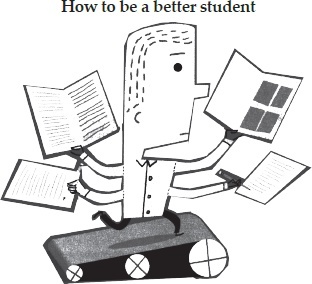
Educators and researchers say that you do not need the carefree mind of the grade-schooler or the late-night stamina of a teenager to be a good student. All you need is the determination to learn something new and the right tools.
1. Get visual. Apparently, learning via graphic novels is about to become the next big thing. A recent study found that comic books were better at helping business majors remember things word for word than traditional textbooks. (…) Such graphic guides exist for just about anything you might want to learn more about.
2. Join a gym. Study after study has confirmed that regular exercise improves cognitive function, memory and even students’ grades. Cardiovascular exercise sends more oxygen to the brain in the moment, and as you age, and some research suggests the cumulative effect may benefit neuron health. (…)
3. Share your progress. Recopying my class notes or writing out questions and answers always helped me do better on tests when I was at school. Composing updates about what you are learning and posting on social networks such as Twitter could be the 2013 version of that practice. (...)
4. Test yourself before you study. Psychologists have known for decades that taking a test helps people retain what they have learned better than if they simply spend more time studying. But recent research has revealed a surprising twist: it works even better if you take the test before you know anything about a subject, so you are all but guaranteed to get the answers wrong. (…)The experts haven’t figured out quite yet why this counterintuitive learning trick works, but it appears that trying – and failing – to recall the information is key.
Scientific American Mind, September/ October 2013.
1. Get visual. Apparently, learning via graphic novels is about to become the next big thing. A recent study found that comic books were better at helping business majors remember things word for word than traditional textbooks. (…) Such graphic guides exist for just about anything you might want to learn more about.
2. Join a gym. Study after study has confirmed that regular exercise improves cognitive function, memory and even students’ grades. Cardiovascular exercise sends more oxygen to the brain in the moment, and as you age, and some research suggests the cumulative effect may benefit neuron health. (…)
3. Share your progress. Recopying my class notes or writing out questions and answers always helped me do better on tests when I was at school. Composing updates about what you are learning and posting on social networks such as Twitter could be the 2013 version of that practice. (...)
4. Test yourself before you study. Psychologists have known for decades that taking a test helps people retain what they have learned better than if they simply spend more time studying. But recent research has revealed a surprising twist: it works even better if you take the test before you know anything about a subject, so you are all but guaranteed to get the answers wrong. (…)The experts haven’t figured out quite yet why this counterintuitive learning trick works, but it appears that trying – and failing – to recall the information is key.
Scientific American Mind, September/ October 2013.
4. Test yourself before you study. Psychologists have known for decades that taking a test helps people retain what they have learned better than if they simply spend more time studying. But recent research has revealed a surprising twist: it works even better if you take the test before you know anything about a subject, so you are all but guaranteed to get the answers wrong. (…)The experts haven’t figured out quite yet why this counterintuitive learning trick works, but it appears that trying – and failing – to recall the information is key.
Scientific American Mind, September/ October 2013.
The aim of TEXT B is to