TEXT B
How the brain constructs flavor
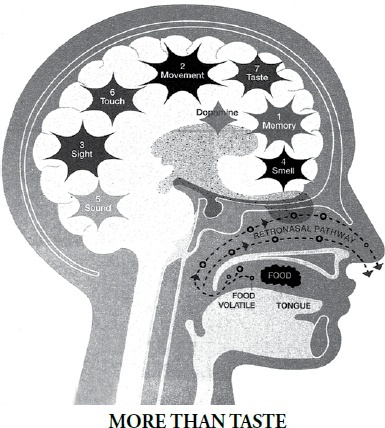
The tongue detects basic tastes, but the nose – with hundreds of receptors for chemicals that waft off food – contributes more to flavor. According to neurobiologist Gordon Shepherd, the brain draws on all the senses to assemble a complex “flavor image” that lingers in our memory.
ANTICIPATION
A flavor experience may begin with a past meal: The memory activates dopamine reward centers, leading us to crave the flavors to come. We salivate.
SENSORY OVERTURE
A brain primed for pleasure begins to receive sensory impulses from the food as we move it to our mouth, see its colors and shapes, and inhale its aromas.
SOUNDS DELICIOUS
We chew. Sound and mouthfeel add key information: Is the food gooey, crunchy, or crispy? Receptors in our taste buds register sweet, salty, sour [and] bitter[…].
SENSATIONS MERGE TO CREATE FLAVOR
Volatile chemicals waft off food as we chew and swallow it, and as we exhale, they’re carried into the nasal cavity from behind. The brain combines information from all the senses to produce the experience of flavor. And though we think it originates in the mouth, most of it actually comes from these “retronasal” smells detected by receptors in the nose. They build the memory that prepares us for the next experience.
National Geographic, December 2015
ANTICIPATION
A flavor experience may begin with a past meal: The memory activates dopamine reward centers, leading us to crave the flavors to come. We salivate.
SENSORY OVERTURE
A brain primed for pleasure begins to receive sensory impulses from the food as we move it to our mouth, see its colors and shapes, and inhale its aromas.
SOUNDS DELICIOUS
We chew. Sound and mouthfeel add key information: Is the food gooey, crunchy, or crispy? Receptors in our taste buds register sweet, salty, sour [and] bitter[…].
SENSATIONS MERGE TO CREATE FLAVOR
Volatile chemicals waft off food as we chew and swallow it, and as we exhale, they’re carried into the nasal cavity from behind. The brain combines information from all the senses to produce the experience of flavor. And though we think it originates in the mouth, most of it actually comes from these “retronasal” smells detected by receptors in the nose. They build the memory that prepares us for the next experience.
National Geographic, December 2015
SOUNDS DELICIOUS
We chew. Sound and mouthfeel add key information: Is the food gooey, crunchy, or crispy? Receptors in our taste buds register sweet, salty, sour [and] bitter[…].
SENSATIONS MERGE TO CREATE FLAVOR
Volatile chemicals waft off food as we chew and swallow it, and as we exhale, they’re carried into the nasal cavity from behind. The brain combines information from all the senses to produce the experience of flavor. And though we think it originates in the mouth, most of it actually comes from these “retronasal” smells detected by receptors in the nose. They build the memory that prepares us for the next experience.
National Geographic, December 2015
The majority of the verbs in TEXT B are in the Simple Present Tense because