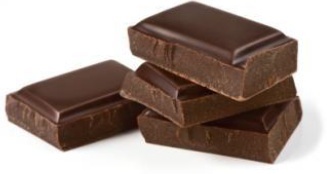
Chocolate could prevent obesity and diabetes, study suggests
Thursday 3 April 2014 - 8am PST More than a third of US adults are obese and are, therefore, at higher risk of type 2 diabetes. But new research suggests a surprising prevention strategy for both conditions - eating chocolate.
In a mouse study, led by Andrew P. Neilson of the Department of Food Science and Technology at Virginia Polytechnic Institute and State University, researchers discovered that a certain antioxidant in cocoa - the main ingredient in chocolate - prevented mice from gaining weight and lowered their blood sugar levels.
This is not the only study to suggest that consuming chocolate can prevent such health conditions.
Earlier this year, Medical News Today reported on a study claiming that chocolate, as well as wine and berries, protects against type 2 diabetes, while other research found that teens who eat lots of chocolate tend to be slimmer.
Such studies claim that the reason chocolate may have these health benefits is because of the flavanols it contains. These are types of antioxidants.
But the researchers of this most recent study say that not all flavanols are the same. In fact, cocoa has several different types.
Good news for chocolate lovers: a certain flavanol in cocoa may help prevent obesity and type 2 diabetes.
In their study, published in the Journal of Agricultural Food and Chemistry, the investigators set out to determine exactly which flavanol may be responsible for preventing weight gain and lowering blood glucose levels.
Oligomeric procyandins most effective
The research team found that a high-fat diet supplemented with oligomeric PCs was the most effective for maintaining weight of the mice and improving glucose tolerance - a factor that could help prevent type 2 diabetes.
Commenting on the findings, the researchers say:
"Oligomeric PCs appear to possess the greatest antiobesity and antidiabetic bioactivities of the flavanols in cocoa, particularly at the low doses employed for the present study.
Additional studies of prolonged feeding of flavanol fractions in vivo are needed to further identify the fractions with the highest bioactivities and, therefore, the greatest potential for translation to human clinical applications at reasonable doses."
The investigators point out that the doses of flavanols used in this study are significantly lower than doses used in past research and are more feasible when translated into flavanol levels for human consumption.
"Therefore, our data suggest that moderate doses of cocoa flavanols or cocoa powder have the potential to be more effective in human clinical trials than previously thought," they add.
According to previous research, the health benefits of chocolate may reach further than decreasing the likelihood of obesity and type 2 diabetes. Medical News Today recently reported on a study claiming that eating 70 g of dark chocolate every day could reduce the risk of atherosclerosis - the thickening and hardening of the arteries.
But interestingly, this study did not attribute this benefit to the flavanols that chocolate contains. Study participants ate either regular dark chocolate or chocolate with added flavanols. Both types of chocolate had the same effect.
"We provide a more complete picture of the impact of chocolate consumption in vascular health and show that increasing flavanol content has no added beneficial effect on vascular health," says study researcher Prof. Diederik Esser, of the Top Institute Food and Nutrition and the Division of Human Nutrition at Wageningen University, both in the Netherlands.
Other research claims that hot chocolate could help prevent memory decline. Again, the researchers say this finding was not down to flavanols.
Written by Honor Whiteman
Found at http://www.medicalnewstoday.com/articles/275008.php , Accessed on 25 May, 2014, edited.
Mark T for True and F for False for each sentence presented, in accordance with the text.
( ) Around thirty five percent of adults in the US are obese.
( ) Laboratory mice gained weight after eating chocolates.
( ) Nearly half American adults are chocolate eaters.
( ) Obese adults run a high risk of getting type 2 diabetes.
Now choose the alternative that presents the correct order: