Read the text below and answer the question that follow.
What Climate Scientists Want You to See in the Floodwaters
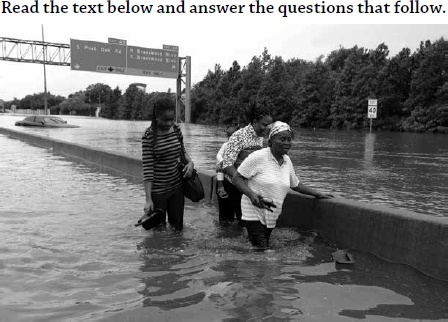
[…] As scientists who study climate risks and how societies can respond, we have been jolted to think hard about our best understanding of why disasters like the hurricane in Texas and the floods in Bangladesh occur, how a changing climate cranks up the odds and what we might do differently.
[…]
We start with two premises. Climate change doesn’t cause extreme events. It amplifies them. And in any weather-related calamity, our susceptibility to harm is, at its root, constructed by ourselves.
On the climate side of risk, we have unambiguous evidence that the hazards are changing. Our emissions of heat-trapping gases have already increased the likelihood and severity of heat waves, extreme rainfall and storm surges. Much of the world’s population occupies places susceptible to this kind of extreme weather that will increasingly be exacerbated by the changing climate.[…] Put simply, a warmer atmosphere can hold more water, increasing the potential for heavy downpours[…] And warmer oceans can produce more intense hurricanes, as has occurred in the North Atlantic and the Gulf.
Unprecedented is increasingly the norm. Without ambitious efforts to drive down global emissions, the changes will be stark, with up to eight feet [2,43m] of sea level rise possible this century. […]
On the human side of risk, we should as a society embrace the fact that how and where we build our homes, plant our crops, construct our roads and bridges, and locate our schools and industries can provide resilience and safety rather than invite calamity. When rivers overtop their banks with floodwaters, for instance, does the water flow into wide-open flood plains and city streets with good drainage, or are those flood plains paved over and the drainage clogged?[…]
We can take actions today that will make us more prepared, no matter what tomorrow holds. People can elevate power outlets in their homes, know their evacuation zone and have an emergency plan. Buildings can be raised and designed to resist hurricane-force winds. Such methods are tested and known to save lives and money. […]
We are not completely at the whims of the weather. With available tools and an eye toward the future, we can limit the amount of climate change that occurs, minimize the risks that remain and build a resilient future.
Katharine MACH and Miyuki HINO, New York Times, September 2nd, 2017.
[…] As scientists who study climate risks and how societies can respond, we have been jolted to think hard about our best understanding of why disasters like the hurricane in Texas and the floods in Bangladesh occur, how a changing climate cranks up the odds and what we might do differently.
[…]
We start with two premises. Climate change doesn’t cause extreme events. It amplifies them. And in any weather-related calamity, our susceptibility to harm is, at its root, constructed by ourselves.
On the climate side of risk, we have unambiguous evidence that the hazards are changing. Our emissions of heat-trapping gases have already increased the likelihood and severity of heat waves, extreme rainfall and storm surges. Much of the world’s population occupies places susceptible to this kind of extreme weather that will increasingly be exacerbated by the changing climate.[…] Put simply, a warmer atmosphere can hold more water, increasing the potential for heavy downpours[…] And warmer oceans can produce more intense hurricanes, as has occurred in the North Atlantic and the Gulf.
Unprecedented is increasingly the norm. Without ambitious efforts to drive down global emissions, the changes will be stark, with up to eight feet [2,43m] of sea level rise possible this century. […]
On the human side of risk, we should as a society embrace the fact that how and where we build our homes, plant our crops, construct our roads and bridges, and locate our schools and industries can provide resilience and safety rather than invite calamity. When rivers overtop their banks with floodwaters, for instance, does the water flow into wide-open flood plains and city streets with good drainage, or are those flood plains paved over and the drainage clogged?[…]
We can take actions today that will make us more prepared, no matter what tomorrow holds. People can elevate power outlets in their homes, know their evacuation zone and have an emergency plan. Buildings can be raised and designed to resist hurricane-force winds. Such methods are tested and known to save lives and money. […]
We are not completely at the whims of the weather. With available tools and an eye toward the future, we can limit the amount of climate change that occurs, minimize the risks that remain and build a resilient future.
Katharine MACH and Miyuki HINO, New York Times, September 2nd, 2017.
We start with two premises. Climate change doesn’t cause extreme events. It amplifies them. And in any weather-related calamity, our susceptibility to harm is, at its root, constructed by ourselves.
On the climate side of risk, we have unambiguous evidence that the hazards are changing. Our emissions of heat-trapping gases have already increased the likelihood and severity of heat waves, extreme rainfall and storm surges. Much of the world’s population occupies places susceptible to this kind of extreme weather that will increasingly be exacerbated by the changing climate.[…] Put simply, a warmer atmosphere can hold more water, increasing the potential for heavy downpours[…] And warmer oceans can produce more intense hurricanes, as has occurred in the North Atlantic and the Gulf.
Unprecedented is increasingly the norm. Without ambitious efforts to drive down global emissions, the changes will be stark, with up to eight feet [2,43m] of sea level rise possible this century. […]
On the human side of risk, we should as a society embrace the fact that how and where we build our homes, plant our crops, construct our roads and bridges, and locate our schools and industries can provide resilience and safety rather than invite calamity. When rivers overtop their banks with floodwaters, for instance, does the water flow into wide-open flood plains and city streets with good drainage, or are those flood plains paved over and the drainage clogged?[…]
We can take actions today that will make us more prepared, no matter what tomorrow holds. People can elevate power outlets in their homes, know their evacuation zone and have an emergency plan. Buildings can be raised and designed to resist hurricane-force winds. Such methods are tested and known to save lives and money. […]
We are not completely at the whims of the weather. With available tools and an eye toward the future, we can limit the amount of climate change that occurs, minimize the risks that remain and build a resilient future.
Katharine MACH and Miyuki HINO, New York Times, September 2nd, 2017.
On the human side of risk, we should as a society embrace the fact that how and where we build our homes, plant our crops, construct our roads and bridges, and locate our schools and industries can provide resilience and safety rather than invite calamity. When rivers overtop their banks with floodwaters, for instance, does the water flow into wide-open flood plains and city streets with good drainage, or are those flood plains paved over and the drainage clogged?[…]
We can take actions today that will make us more prepared, no matter what tomorrow holds. People can elevate power outlets in their homes, know their evacuation zone and have an emergency plan. Buildings can be raised and designed to resist hurricane-force winds. Such methods are tested and known to save lives and money. […]
We are not completely at the whims of the weather. With available tools and an eye toward the future, we can limit the amount of climate change that occurs, minimize the risks that remain and build a resilient future.
Katharine MACH and Miyuki HINO, New York Times, September 2nd, 2017.
We can take actions today that will make us more prepared, no matter what tomorrow holds. People can elevate power outlets in their homes, know their evacuation zone and have an emergency plan. Buildings can be raised and designed to resist hurricane-force winds. Such methods are tested and known to save lives and money. […]
We are not completely at the whims of the weather. With available tools and an eye toward the future, we can limit the amount of climate change that occurs, minimize the risks that remain and build a resilient future.
Katharine MACH and Miyuki HINO, New York Times, September 2nd, 2017.
The text is based on the premise that climate change is