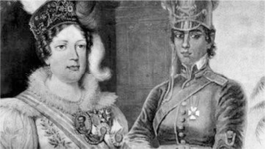
On May 13th, 1822, a group of 186 women sent Maria Leopoldina the Letter from the Bahian Women to Her Royal Highness Dona Leopoldina, congratulating her on her role in the patriotic rulings of her husband, Prince Regent Dom Pedro. The document acknowledged the contribution made by the then princess and empress-to-be to ensuring her husband’s permanence in Brazil, which they believed was a key factor in gaining independence from Portugal. “Far more than just a letter, it is a political manifesto,” notes historian Maria de Lourdes Viana Lyra. “At that time, in Brazil, women were given a subordinate role restricted to private household and family affairs. Outside the domestic sphere, women were made invisible, but that did not stop them from mobilizing politically to fight for independence in a variety of ways,” she states.
In addition to isolated actions led by famous figures, there were other many significant actions that are still largely unknown to the general public, more specifically, those related to instances of collective mobilization of women active in the public arena during the fight for Brazilian independence. Historian Andréa Slemian expands on the matter. “Throughout this process, many women expressed themselves through letters, manifestos, and other texts. Thus, the nascent press in Brazil played an important role, not only by publishing these women’s ideas regarding independence on editorial pages, for example, but also by serving as a mouthpiece for views supporting women’s rights,” notes Slemian.
A na Paula Orlandi. Unafraid to fight. Internet:www.revistapesquisa.fapesp.br (adapted).
Based on the picture above, which shows paintings depicting Empress Maria Leopoldina and Maria Quitéria de Jesus, and the information given in the previous text, it is correct to state that both these women